

In a world that feels increasingly overwhelming, and where the boundaries between work and personal life are bleeding into one another, many of us don’t realise we’re approaching burnout until we’re falling off the metaphorical hamster wheel. For Holistic Empowerment and Transformation Coach, Jo Irving, that moment arrived not in a boardroom or on a long-haul flight, but in the middle of a Costa Coffee – when a panic attack forced her to confront what she had spent years pushing aside.
Jo was, by all external measures, a success story – running one of the UK’s leading hair and make-up agencies, travelling the world for red carpets and destination weddings, and hosting retreats in Ibiza. But behind the glossy milestones was a nervous system stretched beyond its limits, a life moving too fast, and a woman quietly unravelling under the weight of expectation.
What followed was not a breaking, but a breakthrough: A reckoning with burnout, a journey into nervous-system regulation, and an unexpected transformation sparked by a single EFT session that shifted everything.
What is EFT, you may ask? An abbreviation of Emotional Freedom Technique – also known as tapping – EFT is a gentle, therapeutic practice that combines modern psychology with acupressure. By tapping on specific meridian points on the face and upper body while acknowledging an emotion or thought, EFT is credited with calming the nervous system, releasing stored stress, and even shifting limiting beliefs.
It’s a simple, accessible and completely free tool that can be used to ease anxiety, overwhelm, phobias, or emotional blocks – any time, any place. Many people experience a noticeable sense of relief within minutes, making EFT a powerful technique for regulating the body and restoring emotional balance.
For Jo, EFT offered a lifeline that helped her overcome her darkest days. Today, she is committed to helping business leaders, creatives and entrepreneurs to build success without self-sacrifice. With 25+ years of experience as a business owner, she blends science-backed strategies with soulful practices to support personal and professional transformation as a qualified 200-hour meditation teacher and expert in life and business coaching.
As she introduces “The Rise” – an accessible coaching membership built on five pillars of inner growth – Jo shares why burnout is far more common than we think, why modern life overloads us, and how regulating the nervous system can reshape not just our careers, but our entire sense of self.

How did you realise you had reached the point of burnout?
Everything just became too much for me to carry. I’d gone from running one of the UK’s largest hair and makeup agencies to being completely unable to even open my own post. I was avoiding conversations, avoiding tasks, avoiding people – everything felt overwhelming.
And yet, not taking action made me feel even worse, like I was letting everybody down. I was having panic attacks, anxiety that was completely debilitating, and I knew something had to change.
The moment it really hit me was when I had a massive panic attack in Costa Coffee. It left me unable to drive, and for about two weeks I could barely function independently. It wasn’t a long time, but it was long enough for me to realise the way I was working and treating my body just wasn’t working anymore.
Were there any warning signs in the build-up to reaching burnout?
Looking back, there were definitely burnout warning signs I ignored – things I would never brush off now because I understand exactly what they are.
I would wake in the night with this terrifying sensation that started in my feet and rose through my whole body. It felt like I was about to have a heart attack. My chest was tight, I felt sick, I couldn’t breathe properly, my body would shake, my legs tingled with pins and needles. I remember one night calling my mum at three in the morning because I truly believed something was physically wrong with my heart. Now I know that was anxiety.
I also noticed that panic attacks often hit me during or just after yoga. I used to do strong vinyasa flows, so my heart rate was already elevated, and then suddenly it would all come crashing in. Looking back, I realise that was the only time I gave my brain a rest – and all the feelings I’d been ignoring finally had space to come through. My whole mindset back then was “push through it, ignore it, it’ll go away.” But of course, it doesn’t.
There were also the more subtle signs – feeling constantly agitated, a little resentful, reactive instead of responsive. I was running on high all the time, tolerating things that didn’t feel good, people-pleasing to keep others happy. Saying yes to everyone else but putting myself last. At the time it felt like I was doing the right thing – being helpful, being capable – but in reality, it was slowly dismantling my health and wellbeing.
One doctor explained it to me with the analogy of a bucket: Imagine water dripping into it constantly until one day it simply overflows. That’s exactly what happened to me. It wasn’t one big event, it was the accumulation of all the little things I kept dismissing.
How did you begin to move through this difficult time?
One of the biggest turning points for me was to finally allow myself to say out loud that I was struggling with anxiety. I’d kept it all to myself for so long because I thought I was protecting my privacy, but actually it just made it feel bigger and heavier. When I started talking about how I was feeling, I realised so many other people felt the same. Sharing was the first part of my healing, because shame grows in silence. The moment you voice it, the weight begins to lift and things feel more manageable.
My husband booked me into therapy, and I tried CBT and EFT. At first it all felt overwhelming, but EFT completely changed everything. To experience such a shift in my mindset and how I was feeling so quickly was life-changing. That was the start of a whole new path for me – one where healing and transformation became just as important as success.
Burnout was added to the official International Classification of Diseases (ICD-11) by the World Health Organization in May 2019 as an “occupational phenomenon” – a sign of our times?
I honestly believe burnout is more common than not. Once you start the conversation, people will either share a time when they’ve been through it or realise they’re in the middle of it themselves without having named it.
The reality is we’re just not designed to be switched on all the time. The human brain can take in around 11 million pieces of information per second, but our RAS – our reticular activating system – filters that down to about 40. Otherwise, we’d completely short-circuit. And yet, modern life keeps us constantly plugged in. Our phones are in our pockets, people know they can reach us at any time, and we’re bombarded with emails, texts, WhatsApps, Instagram notifications… it never stops.
On top of that, technology has made everything faster. That sounds like a gift, but it’s created a culture where we’re expected to do more in less time. Even with AI now, it’s brilliant, but it also raises expectations – people assume things should be delivered instantly, which puts even more pressure on us. The good news is there’s much more awareness now.
EFT is still not as widely known as other practices such as yoga, mediation or breathwork. What were your first experiences like?
When I first went to EFT, I honestly didn’t even want to get out of the car. That’s the reality of a nervous breakdown – it’s not about being lazy or not making the effort. Your body takes over. You literally can’t. At that time, I couldn’t even drive myself; my husband had to take me an hour away to this session. We got there and I just sat in the car crying, saying I couldn’t do it. Somehow, eventually, I went inside.
I remember barely being able to speak to the practitioner. She just started gently talking to me and tapping on me, so I didn’t even have to do anything myself. I sat there with my eyes closed while she worked on the meridian points of my body.
And then something extraordinary happened. I started to feel a flutter of excitement in my belly, a lift in my chest. The fog that had been weighing me down lifted – instantly. By the time I left, two hours later, I was literally giggling. My husband looked at me like, “What just happened?” I felt light, happy, free.
That’s the power of Emotional Freedom Technique. It works directly on the nervous system by releasing the energy we hold in the body. For me, it was life-changing – so much so that I trained to become an EFT practitioner myself. To be able to shift how you feel so quickly and so profoundly is nothing short of incredible!
Can you talk us through an EFT routine?
With EFT, you work in rounds. It always starts with what’s called a “set-up statement”, where you tap on the side of your hand, the “karate chop point”, while naming what you’re feeling. For example, you might say: “Even though I’m feeling anxious, I fully love and accept myself.” You’d repeat that three times, but each time you could slightly shift it – maybe one round for anxiety, another for overwhelm, another for simply not knowing what you’re feeling. You don’t have to get it perfect or specific – the important part is acknowledging what’s there.
From there, you move into the tapping sequence on the body – I use a version with seven points on the face and upper body. As you go round the points, you begin to feel the emotion release. A really helpful tool is to rate the intensity of the feeling on a scale of 0 to 10 before you start. That way, you can check in as you go, and notice the intensity easing off.
EFT can support such a wide range of issues – from everyday anxiety or overwhelm right through to phobias, PTSD, grief, or childhood trauma. Because it works directly on the nervous system and meridian points, it helps the body release what it’s been holding onto, even if it’s something you weren’t consciously aware of.
What emotions can Emotional Freedom Technique help with?
It’s a very safe practice, but if you’re working through something really heavy, I always recommend doing it with a practitioner. That way, you have support if deeper feelings come to the surface.
What if anxiety strikes in public? Can you start tapping in any place, at any moment?
Yes, absolutely – tapping doesn’t always have to be formal or involve speaking out loud. If I’m on a plane, a train, or even stuck in traffic, I’ll often just tap gently on my collarbone. You don’t need to say anything at all if it doesn’t feel possible in the moment. The physical act of tapping on the meridian points still signals safety to the nervous system, and the result can be very similar. It’s a brilliant, discreet tool you can use anytime you feel anxious or unsettled.

When you started to recover from burnout, what changes did you implement?
For me, redefining success was non-negotiable. The year I burnt out so badly – what I would have called a breakdown at the time but now see as a breakthrough – forced me to really look at what I was chasing.
On paper, everything looked incredible. I was travelling the world styling hair for red carpets and weddings. I had shoots in New York, Sri Lanka, Mexico, Morocco. I was standing on stages, seeing my work in magazines, and running retreats for hairdressers in Ibiza. From the outside, it was a dream career. But inside, I was completely disconnected.
I was teaching others about creativity, community, adventure, nature, nourishment, and exercise – all the pillars that keep creatives thriving – and yet I wasn’t doing the deeper work myself. I’d built a shiny version of success that looked good, but didn’t feel good.
What I’ve learned since then is this: True success, to me, feels like a regulated nervous system. It feels like peace, calm, fun, and freedom. The external achievements can absolutely be part of it, but if they come at the expense of your wellbeing, they’re not worth it.
For me, the benchmark now is: Does this feel aligned? Does it bring me joy? Can I experience it with peace in my body? If the answer’s no, then it’s not my version of success anymore.
How can we apply these values in business?
When people think about business success, they usually go straight to strategy. They want to know how to do less, how to structure their time, how much money is coming in, what the profit and loss looks like. And all of that is important. But what often gets overlooked is the human being at the centre of it all.
It’s the human who has to sit and do the spreadsheets, show up on social media, pitch to a big company, have the difficult conversations, launch the podcast, write the newsletter, create the product. If the foundation of that human is unsettled, anxious, or exhausted, no amount of strategy will stick.
When your nervous system is dysregulated – when you’re stuck in anxiety, fear, or low self-worth – you either can’t take the action at all, or you take it from a place that doesn’t land with impact. You might not pitch the idea. You might water yourself down. You might avoid the opportunities altogether.
But when you’re regulated, everything shifts. You can lead, innovate, and take brave action because you feel steady in yourself. It’s not about being perfect or always feeling calm – it’s about being regulated enough to move forward with clarity, confidence, and resilience. That’s what creates sustainable success.
Do you have any daily practices for a regulated nervous system?
I’d love to say I journal every day, but I don’t – and I think it’s important to be honest about that. What I do is use journaling as a tool when I need it. If I’m going through something tricky in my life or business, I’ll journal to find clarity. In a way, it’s like self-coaching on paper.
What I do every single day is meditate. Sometimes it’s just 10 minutes listening to something on Insight Timer [an app with thousands of free meditations], but that small act of pausing and regulating my system keeps me grounded.
I also use visualisation when I’m preparing for something big – whether it’s stepping on stage, recording my podcast, or holding space in a corporate workshop. I’ll visualise how I want it to go, how I want to feel, and how the energy in the room will flow. For me, energy is everything. When I consciously manage mine, it’s the difference between a “nice” session and a truly empowering one.
“Alignment” is a word that we hear being used more often – what does it mean to you?
For me, alignment is when your values, your energy, and your truth all match your actions. It’s when the way you live and work reflects who you really are.
That doesn’t mean everything is easy or that you’re happy all the time. It means you’re not in resistance with yourself anymore. You’re not pushing against your natural design or chasing someone else’s blueprint of success. You’re walking to the rhythm of your own drum – even if that rhythm is quiet, slow, wild, or unconventional.
Being in alignment is knowing what you need in order to feel like your best self, and putting boundaries in place to protect that. When you live from that place, you don’t waste energy pretending to be someone else, and that frees you to show up fully in your own way.
How does living or working out of alignment affect us?
Everything feels harder. You second-guess yourself constantly. You procrastinate or spiral into panic cycles. You need outside validation before you can take action. It’s exhausting, because you’re performing or pretending to be someone you’re not.
That kind of disconnection chips away at your sense of self-worth. You might feel invisible or misunderstood. You might start resenting the people around you – in your family, in your business – because they’re not carrying the weight or taking the risks that you are. And deep down, you just know you’re not being true to yourself.
Over time, it leads to negative spirals: Exhaustion, anxiety, the sense that nothing you do is good enough. And because your self-worth is low, you start making choices that reflect that – putting yourself in roles, relationships, or situations that don’t serve you. It becomes a cycle that feeds itself until you stop, realign, and choose differently.
What inspired your new coaching membership “The Rise”?
The Rise was born out of a very real gap I kept seeing in the coaching world. Coaching is powerful, but it’s also expensive – and not everyone can access it. Yet almost everyone could benefit from it. I wanted to find a way to support more people without compromising on depth or transformation.
When I looked at the clients I’ve worked with one-to-one, I realised there’s a pattern, a kind of formula. No matter where we start, we always move through certain foundations before things begin to shift. And then there’s a moment – the moment I call the rise.
That’s when everything clicks into alignment. Suddenly, opportunities start flowing in. My clients begin speaking on stages, opening second businesses, meeting new people who change their lives, or simply taking better care of themselves. They feel healthier, more confident, more decisive. Leadership becomes easier, life feels lighter, and growth starts to accelerate.
I realised those early stages of coaching – the five core pillars we always touch on, whether consciously or not – could be shaped into a framework. That framework is now the foundation of The Rise membership.
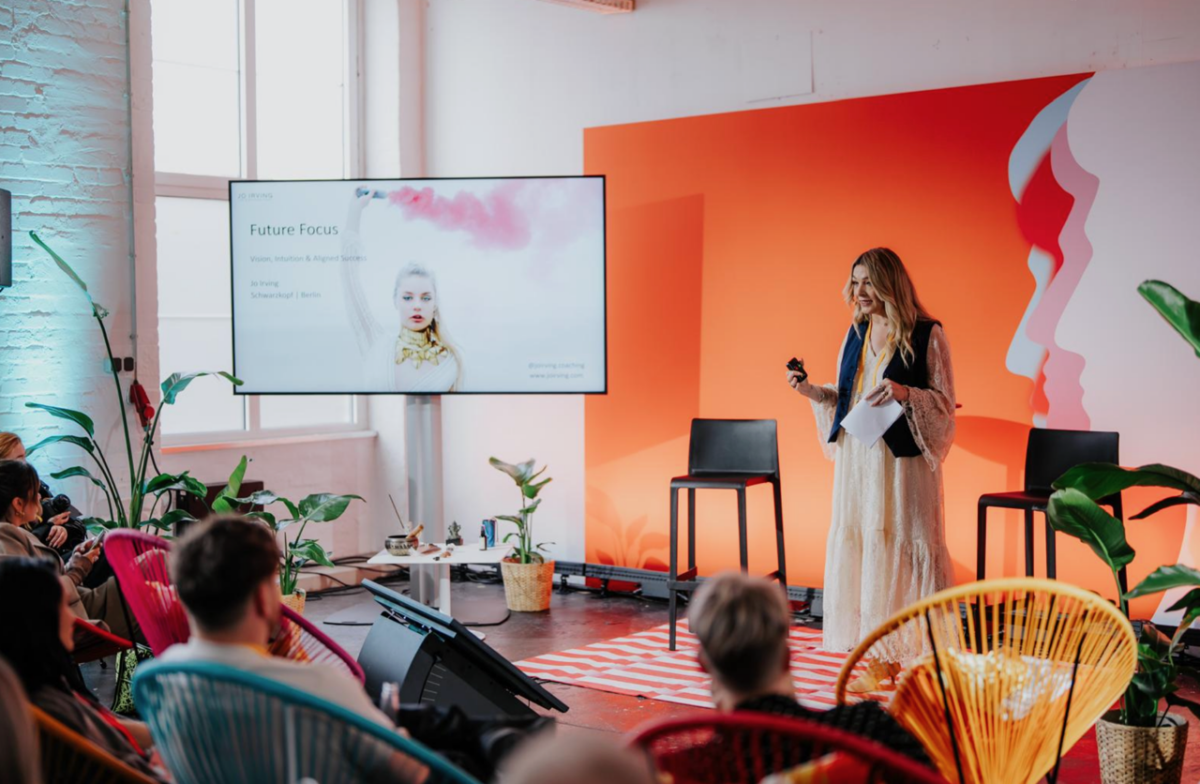
What are the five pillars of The Rise?
They are the foundations I’ve seen every client move through before they hit that breakthrough moment where everything starts to flow.
- Awareness – We explore the stories you’ve been telling yourself, the limiting beliefs holding you back, and the patterns that no longer serve you. We bring clarity to your values, your emotional needs, and even where your time and energy are really going.
- Alignment – The next step is aligning your actions with your soul codes – those deeper truths that make you who you are. It’s about creating a life and business that feels authentic, not just one that looks successful from the outside.
- Vision – From there, we connect to your version of success. Not what you’ve been told it should look like, but what it truly means for you. We map out a vision that feels expansive, inspiring, and rooted in your values.
- Authenticity – This pillar is about showing up as your real self, without the masks or performances. It’s about leading, creating, and living in a way that feels true to you – because authenticity builds trust, connection, and confidence.
- Growth – Finally, once the foundations are in place, we switch on CEO mode. We look at how to grow your business up or out, depending on your vision. This includes leadership, strategy, and the crucial piece of continually regulating your nervous system so growth feels sustainable, not overwhelming.
Who is The Rise for?
The Rise is designed for people who hold the reins in their work – those who are responsible for leading, deciding, or creating. That might be CEOs of global companies or it might be someone running a business from their garden shed. The level doesn’t matter. The issues are the same when you’re the one carrying the vision and the responsibility.
I created The Rise to be as accessible as possible, so it’s not limited to people on huge incomes. What matters is the role you play and the way you show up in your business. It’s for anyone who has to make decisions, hold space for others, or create something original that comes from themselves.
And that’s a really important piece – creatives, whether they’re artists, hairdressers, designers, or writers, are all essentially pulling something from their soul and offering it up for others to judge. That takes courage, but it can also be incredibly vulnerable and draining. The Rise helps people return to their vision, reconnect to their higher self, and build their own version of success without burning out.
It’s for the leaders and creatives who are the business – the ones who need both strategy and self-regulation to thrive.
| The Rise is available now and costs £247 a month with a three month minimum commitment. To find out more, visit www.joirving.com/the-rise. |


